 United States
Forty years of technology, independence and possibility
Published:
Today, we celebrate 40 years since Dolphin Computer Access began developing assistive technology for blind and partially sighted people. We are proud of the part we have played, and especially proud of the people who have used that technology to learn, build careers and live more independently.
When Dolphin began in Worcester in 1986, computers were only just starting to appear in schools, workplaces and homes. Many of the opportunities they offered were beyond the reach of blind and partially sighted people.
Since then, information once available only in print and embossed braille has become accessible through digital speech, magnification and electronic braille. Students can learn with their classmates, employees can use modern workplace systems, and books, news and services can be reached from everyday devices.
Dolphin has grown through those changes, from its early screen reading and magnification software to today's key accessibility software: SuperNova, Dolphin ScreenReader, EasyReader and GuideConnect. Throughout that journey, our users have shown us where barriers remain and helped us understand how accessible technology can make a genuine difference.
Learning on equal terms
Access to education can shape a person's confidence, qualifications and choices for the future. For a blind or partially sighted student, receiving a worksheet, textbook or exam paper in an accessible format at the right time can change their whole experience of learning.
 The SuperNova Education Kit combines portable computer hardware with SuperNova Magnification and Speech software, giving students with low vision a way to work that suits their own sight and individual needs. Iona Wilkinson remembers how school felt before she had the right technology:
I was constantly playing catch-up. I had to work so much harder than my peers just to access the learning, let alone be able to learn and complete classwork.
After receiving a SuperNova Education Kit, her experience changed: I was able to complete tasks independently and could access the materials quickly... Most importantly, I had the same access as my peers and it felt amazing.
Stories like these have always driven our work. They show how timely access gives students the freedom to concentrate on learning, take part with their peers and pursue their ambitions.
SuperNova: Opening doors at work
 As computers became central to working life, accessible technology opened doors to careers that had previously been difficult to enter. Today, blind and partially sighted people use SuperNova and Dolphin ScreenReader to access emails, documents, spreadsheets, online meetings and specialist workplace systems.
Independent access allows people to focus on their work, share ideas and take on responsibility, whether they are starting a first job, returning after sight loss or progressing towards a career goal.
Mark Abel, an administration assistant who uses SuperNova Magnifier & Screen Reader for spreadsheets, emails, documents and other daily tasks, described the confidence it gave him: As soon as I started looking at it and using it, I thought, ‘I can do anything!'
SuperNova Enterprise is used by large organisations, including banks and government departments. It helps employers provide reliable, consistent access across complex IT environments, enabling blind and partially sighted employees to work productively and build careers that reflect their skills and experience.
An inclusive workplace gives everyone the opportunity to contribute. Accessible technology helps turn that principle into everyday practice, benefiting employees, their colleagues and the organisations they work for.
EasyReader Education: Learn without limits
Reading has changed just as dramatically. Large specialist devices and physical collections of accessible books have been joined by digital libraries available from a phone, tablet or computer.
For Laura Siekapen, discovering that she could carry accessible books on her phone was revolutionary: Having such a wealth of resources literally at my fingertips and at just the click of a button was truly transformative for me.
Eva, a high school student, used EasyReader while preparing for her GCSEs. Accessible, independent access to her study materials helped her approach her exams with greater confidence:
EasyReader helped me achieve excellent GCSE results.
EasyReader Education now brings that opportunity to young people with dyslexia and other forms of neurodivergence. Pupils can access the same books and learning materials as their classmates, reading in the way that works best for them as individuals.
In school and at home, the new AI-powered Explore Tools help pupils strengthen their understanding, revisit important topics and cement classroom learning. They can revise more independently and build the knowledge and confidence they need to achieve their best possible exam outcomes.
Independence in everyday life
 Some of the most meaningful changes happen quietly at home. Reading a private letter, choosing a book, writing to a friend or contacting family may be everyday activities, but the privacy and independence they bring can mean a great deal.
Rosemary, who has macular degeneration, uses GuideConnect to read her post, enjoy radio programmes and stay connected with her family:
It's an extremely handy tool of living as far as I'm concerned and I couldn't imagine life without it now.
Michael, a retired black cab driver who lost his sight later in life, had gone five years without using a computer. With GuideConnect, he began exchanging emails with his family and writing letters again. His daughter Irene said:
Even at this early stage, GuideConnect has completely opened up the world for him.
Noel Duffy's lasting legacy
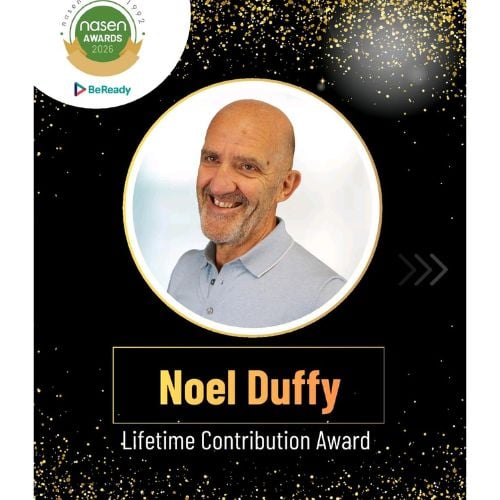
Dolphin's story was shaped by the vision and determination of our late CEO, Noel Duffy, who led the company for more than 30 years. Noel was a passionate advocate for blind and partially sighted people, and his leadership helped make technology, information and education more accessible to people around the world.
His influence reached beyond Dolphin. He championed better access to books for people excluded by inaccessible formats. This week, Noel was posthumously honoured with the nasen Lifetime Contribution Award, recognising his exceptional contribution to inclusive education and support for children and young people with SEND.
Noel believed deeply in technology's power to remove barriers and create opportunity. That belief continues to guide us, from the products we develop to the communities we work with and the future we are building.
Looking ahead
The progress of the past 40 years can be seen in people's everyday lives, and technology is developing at an extraordinary pace: AI, mobile devices and digital services offer so many exciting possibilities for inclusion and accessibility. We will embrace them thoughtfully, listening to our users and exploring how Dolphin can use this technology to continue to improve education, employment and daily life for our customers.
James Green, CEO of Dolphin Computer Access, said:
“Over the past 40 years, technology has changed beyond recognition, but the reason for our work has remained constant. We want blind, partially sighted and neurodivergent people to have equal access to education, employment, information and the everyday things that support an independent life.
We are proud of the part Dolphin has played, and even prouder of what our customers have achieved. As new technology emerges, we will keep listening to our community and finding practical ways to make those opportunities accessible to everyone.”
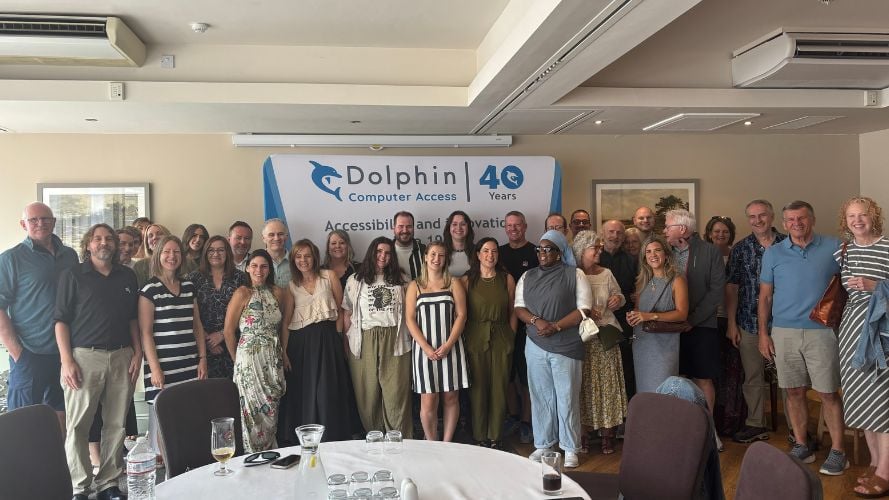
Today’s celebration belongs to everyone who has shaped Dolphin’s first 40 years, especially the people who have used our technology to achieve something that once felt out of reach. Their determination, ambitions and achievements are the heart of our story, and they will inspire everything we do next.
Read more about Dolphin at 40 >
Share this story now:


